
What Is a Postal Code and How Do You Read It?
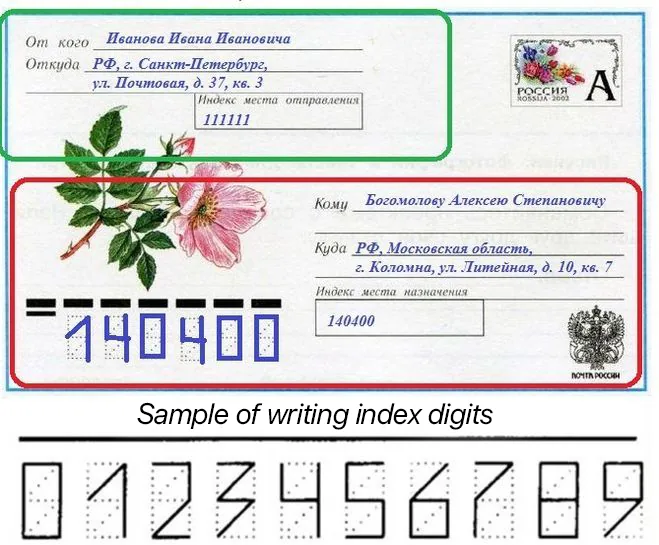
Whenever we place an order online or send a package, we're asked to enter a "postal code." Most people just type a one followed by five zeros — 100000 — without giving it much thought. In reality, each pair of digits in this six-digit number carries a specific meaning, and entering them correctly has a direct effect on how quickly and accurately your shipment reaches its destination. Let's take a look at how Uzbekistan's postal code is structured, what each pair of digits means, and how this system differs from those used in other countries. How to Read Uzbekistan's Postal Code Uzbekistan's postal code consists of six digits and is built using one of two formats — one for regions, and a special one for the city of Tashkent. In other words, Tashkent has its own dedicated three-digit lead code (100), while every other region's code begins with a two-digit number: 10–11 — Tashkent city and Tashkent region; 12 — Syrdarya region; 13 — Jizzakh region; 14 — Samarkand region; 15 — Fergana region; 16 — Namangan region; 17 — Andijan region; 18 — Kashkadarya region; 19 — Surkhandarya region; 20 — Bukhara region; 21 — Navoi region; 22 — Khorezm region; 23 — Republic of Karakalpakstan. Interestingly, in the old vehicle license plate system, the first two digits were actually based on the region's postal code — Andijan vehicles were issued series 17, while Tashkent city vehicles were issued series 10. As a general rule, when you see a six-digit postal code — say, 220605 — the first two digits indicate the region (22 — Khorezm region), the next two indicate the district (06 — Qo'shkupir district), and the final two indicate the specific area or post office within that district (05 — Khonobod zone). Are the City Code and Postal Code the Same Thing? If you look closely at the postal code tables on www.emu.uz, you'll notice that two different six-digit numbers are listed for each region: an Index/Postal Code (e.g., 110100) and a City Code (e.g., 386906). Many people mix up these two different six-digit codes. In reality, these are completely different systems: Postal code (Index) — the postal code that indicates the physical address your shipment should be delivered to. This is the number written on an envelope or box. City code — a statistical-administrative code assigned under Uzbekistan's system for classifying administrative-territorial units (SOATO). It's mainly used in government statistics, tax records, and official reporting to identify a territory, and has no direct connection to postal delivery. Simply put: when sending a shipment, you only need the number from the "Postal code" column — the "City code" serves internal official and statistical purposes. Is There a Single Global Postal Code Standard? There is no single, unified postal code system used worldwide. The Universal Postal Union (UPU) — the main international organization overseeing postal services — has not introduced a mandatory, unified postal code format for all countries. However, the UPU does maintain a specific standard called S42, which isn't a postal code format itself but rather a general template for structuring addresses. Under this approach, each country keeps its own postal code system, while S42 simply defines the order in which address elements (street, house number, city, postal code) should be written for international shipments. Today, more than 116 countries around the world have their own postal code, but their formats differ fundamentally from one another: As you can see, some countries use postal codes made up entirely of digits, while others mix letters and numbers. The length of postal codes also varies by region — roughly from 4 to 7 characters. Which "Family" Does Uzbekistan's System Belong To? Uzbekistan's six-digit, purely numeric postal code system traces back to the unified postal indexing system that was in use across the former Soviet Union. That's exactly why Uzbekistan's postal code follows the same logic — six digits, starting with a regional code — as the postal codes of Russia, Kazakhstan, Belarus, and other CIS countries. Why Does It Matter to Know Your Exact Postal Code? From a practical standpoint, entering the postal code correctly and completely has a direct, positive effect on the following: Sorting speed — automated sorting centers read the postal code and route the shipment straight to the correct regional branch. An incorrect or incomplete postal code means postal staff have to carry out extra manual checks, costing extra time. Reducing the risk of errors — especially where cities or districts share similar names (multiple regions can have villages or streets with the same name), postal codes make it possible to distinguish the exact delivery address without confusion. Reliability for international shipments — when sending a package abroad, correctly entering the destination country's own postal code format (for example, a 5-digit ZIP code for the US, or an alphanumeric postcode for the UK) helps ensure your shipment doesn't get lost and arrives quickly. In Summary If you don't know the exact postal code for your address or the region you need to ship to, there's no need to search for it manually. You can find the correct postal code in seconds using EMU Express's postal code lookup tool — just enter the address or select the region on the map. You can also browse postal codes for every region of Uzbekistan in table form on the dedicated reference page. Umidjon Ahunjonov — Marketing and Sales Specialist