What's Prohibited from Being Sent by Mail?
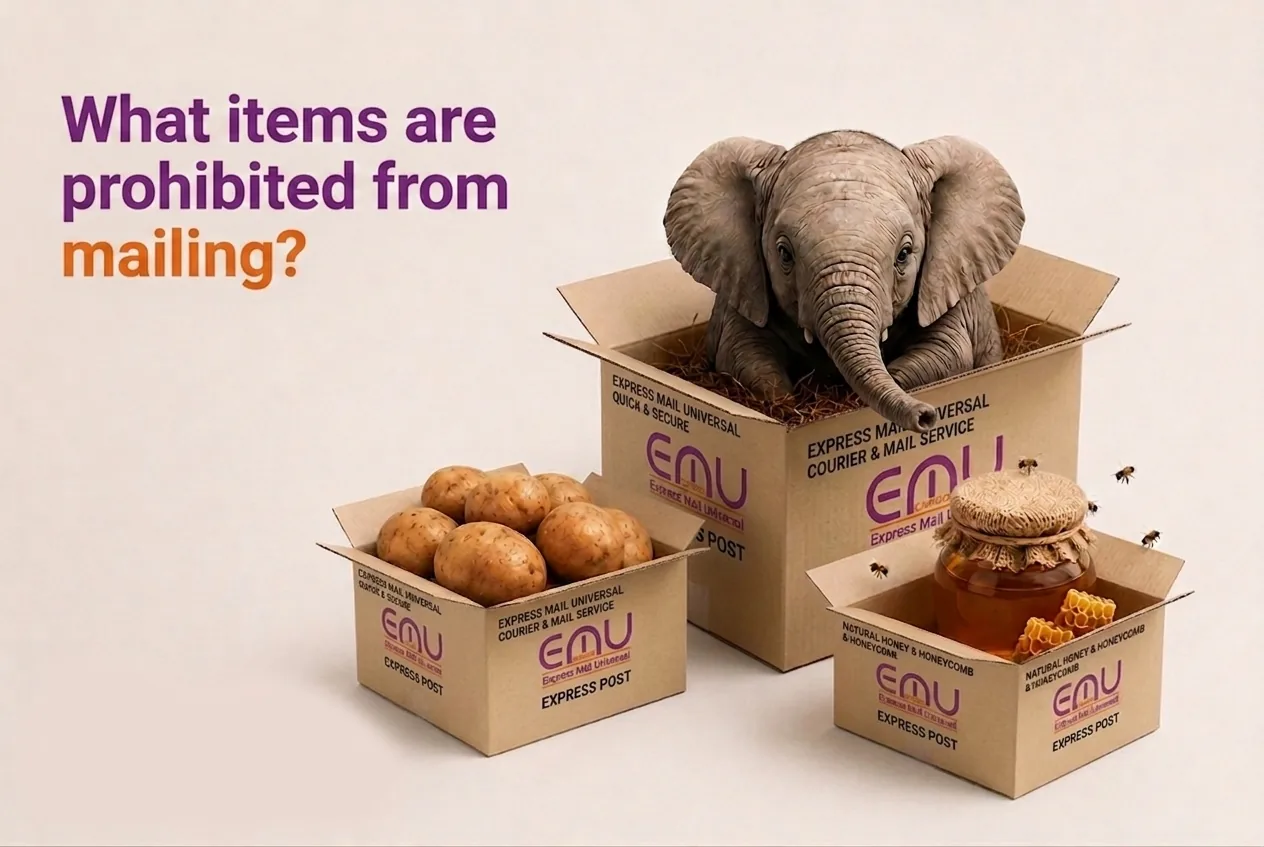
Before shipping a package, many customers reach out to our operators with the question: "Can I send this item?" Unfortunately, this question sometimes comes up only after a shipment has already been stopped in transit, at the border, or at an inspection checkpoint — resulting in lost time, financial loss, and sometimes legal liability. That's why we recommend reading this post carefully before preparing your shipment. Why do these restrictions exist? The list of prohibited and restricted items isn't arbitrary — it comes from three sources: Safety rules — protecting the vehicle, sorting center staff, and other customers' shipments (referring to explosive, flammable, or toxic substances). Legal requirements — customs and law enforcement legislation in Uzbekistan and other countries (weapons, narcotics, counterfeit goods). International postal conventions — general standards set by the Universal Postal Union (UPU) and the International Air Transport Association (IATA). Fully prohibited items Items in this category cannot be sent by mail or courier service under any circumstances or with any type of packaging: Weapons and explosives — firearms, ammunition, weapon parts, fireworks, explosive and flammable substances; Narcotic and psychotropic substances — except for prescription medications (see below); Toxic and radioactive substances — chemical reagents, radioactive isotopes; Live animals and plants — without a special phytosanitary permit (individual exceptions are arranged as a special service); Counterfeit (fake) goods — imitations of original brands, copies that infringe copyright; Money and securities — cash, checks, securities (except when arranged with insurance and a special declaration); Human organs and biological materials — without a special medical license; Pornographic materials and other content prohibited by law. Items that can be shipped under special conditions Sending items in this category requires additional documentation, special packaging, or prior arrangement. Pay special attention with international shipments! The list above is general, since every country has its own additional customs rules. For example, an item considered ordinary in one country (say, certain food supplements or plant seeds) may be completely prohibited in another. So before shipping abroad, check the destination country's customs website or consult EMU Express operators. What happens if a prohibited item is shipped? The shipment will be held at the sorting stage or at customs; The sender will be notified and the item either returned, or — in the case of a legal violation — handed over to the relevant authorities; In certain cases, administrative or criminal liability may follow (for example, if a weapon or narcotic substance is discovered); The shipping fee is non-refundable. Legislation — important! For detailed information on the legal framework governing items that are prohibited or that can only be shipped under special conditions, we recommend reviewing the following documents: Annex No. 3 to the "Rules for Providing Postal Communication Services," approved by order of the Director General of the Communications and Informatization Agency of Uzbekistan dated April 18, 2011 (registration No. 2219); Resolution of the Cabinet of Ministers of the Republic of Uzbekistan "On Approving the Regulation on the Procedure for Customs Control and Clearance of International Postal and Courier Shipments," dated December 21, 2021, No. 767; The new Law "On Postal Communications" (Law No. ZRU-777), adopted on June 9, 2022. Quick tips for safe shipping Since inaccuracy can cause problems later, describe the contents of your shipment to the operator accurately and completely. If the item you're shipping seems questionable, call +998 71 200 96 69 beforehand or visit your nearest EMU Express branch to clarify the matter. And for international shipments, check the destination country's restrictions in advance.